Follow along as we plan a simple beginner's vegetable garden. In this guide, we'll set up three popular crops and show you exactly how GrowPlanner helps you succeed.
Tell GrowPlanner about your climate so it can personalize your planting schedule
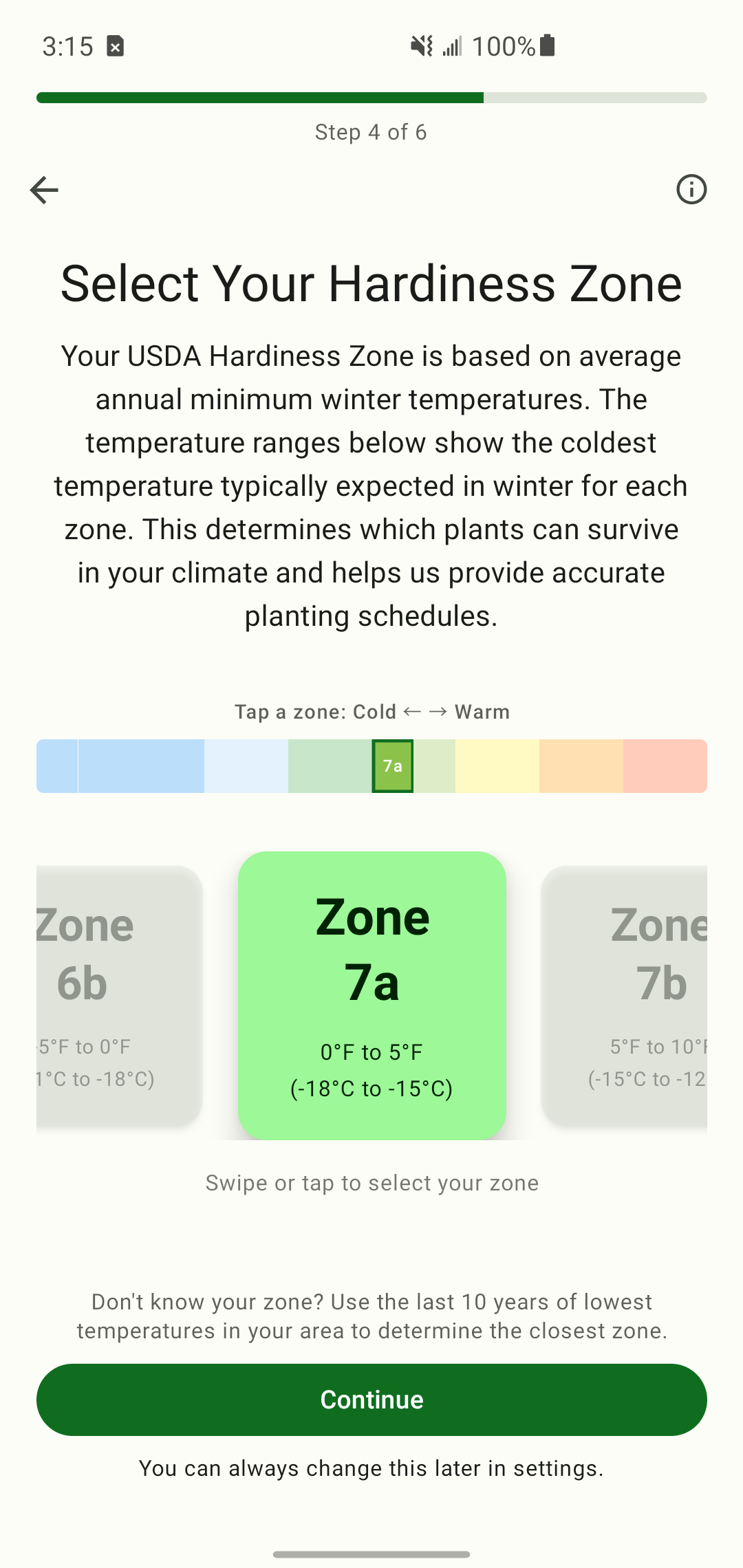
When you first open GrowPlanner, you'll go through a quick setup process. The most important step is selecting your USDA hardiness zone and frost dates.
For this example, let's say we're gardening in Zone 7a with:
This gives us about a 6-month growing season - perfect for tomatoes, lettuce, and basil!
Don't know your zone? Search "[your city] USDA hardiness zone" or check the USDA Plant Hardiness Zone Map.
Explore what you can grow and see which plants work best for your zone
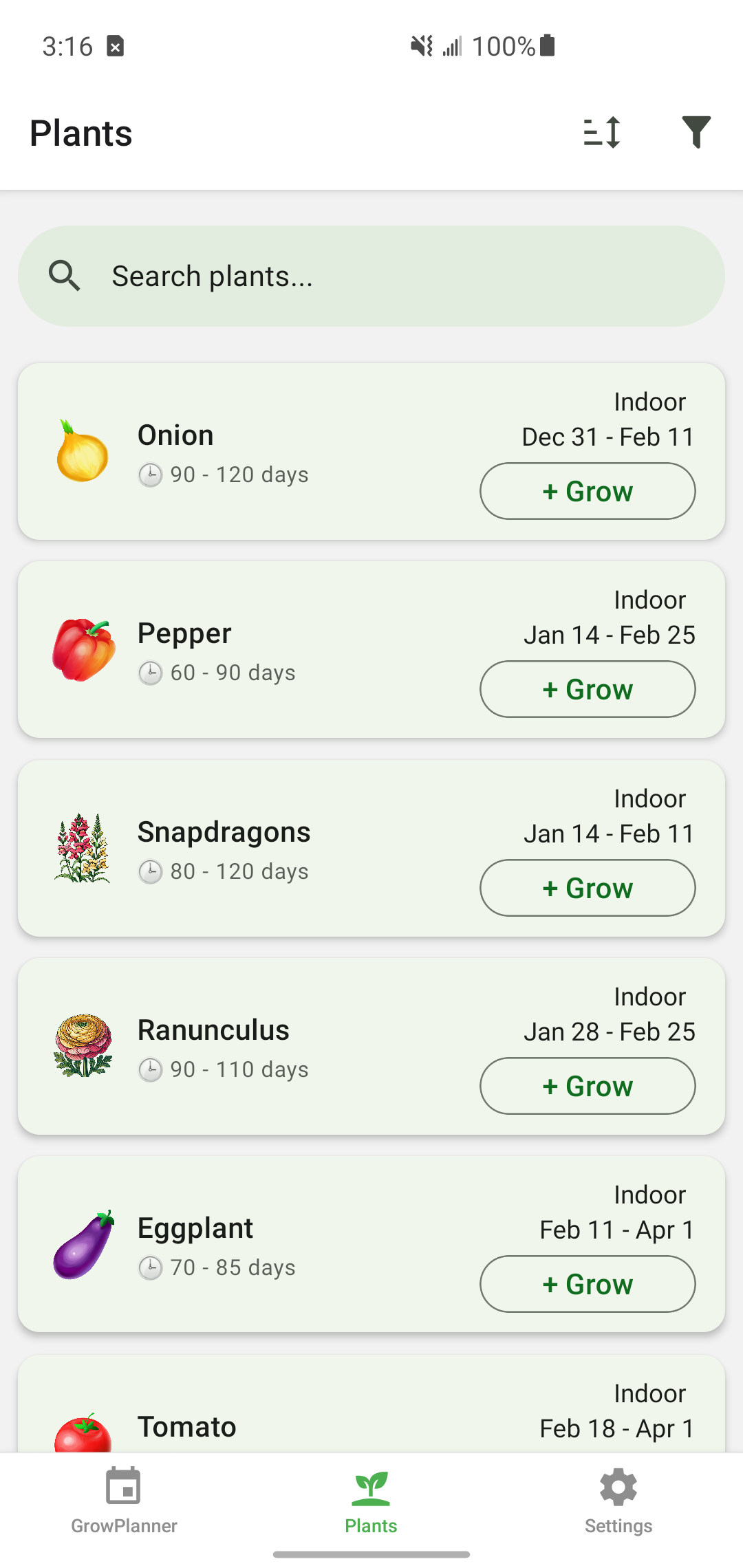
Head to the Plants tab to browse over 50 vegetables and herbs. Each plant shows key information at a glance:
For our beginner garden, we'll select:
Start small! It's better to succeed with 3 plants than struggle with 10. You can always add more next season.
Let's start seeds indoors for a head start on the growing season
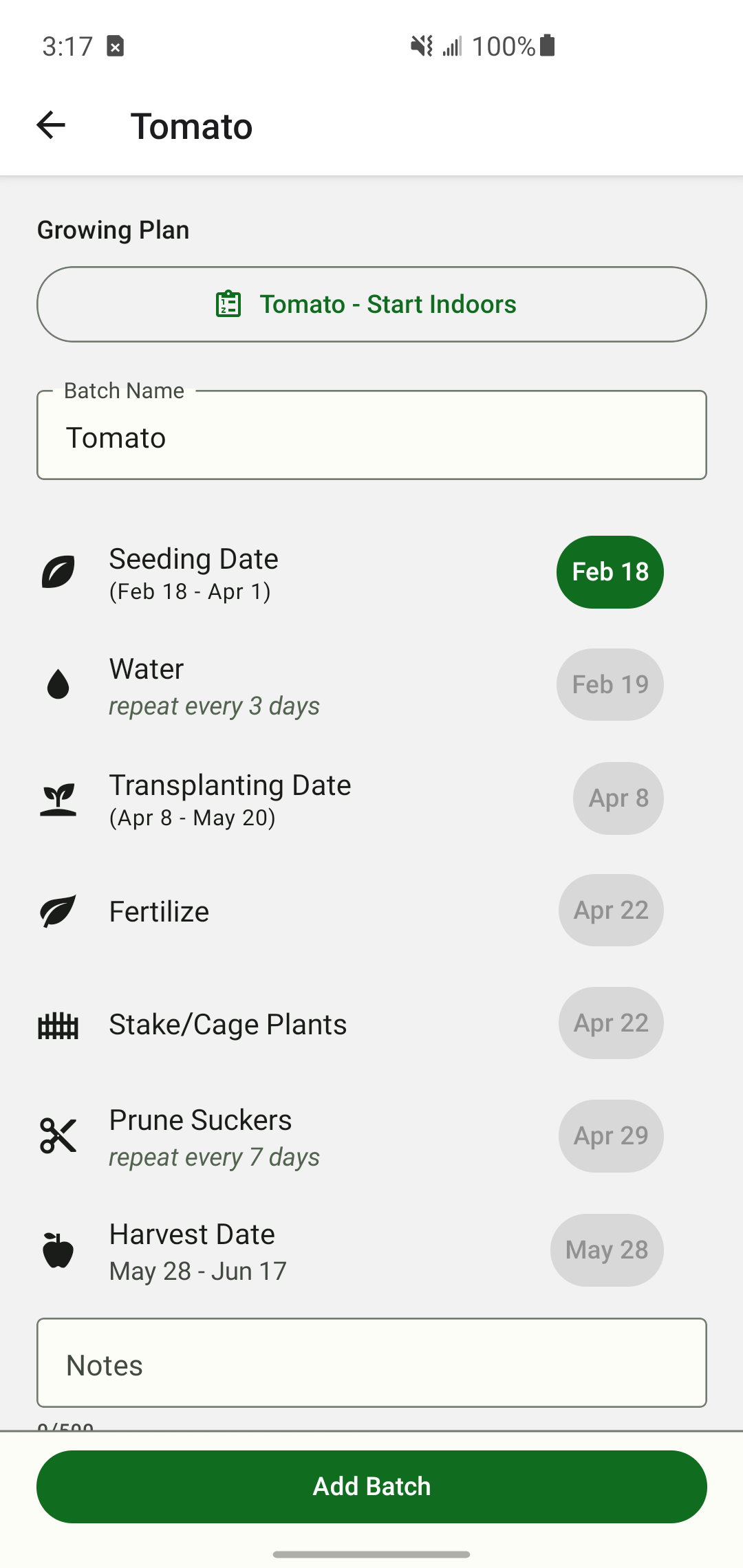
Tap on Tomatoes, then tap "Add Batch". You'll see different growing methods:
We'll choose "Start Seeds Indoors" for the best results. GrowPlanner automatically calculates:
Notice the green "Safe" indicator? That means your planting date is within the recommended window for your zone.
Direct seed lettuce for an early harvest
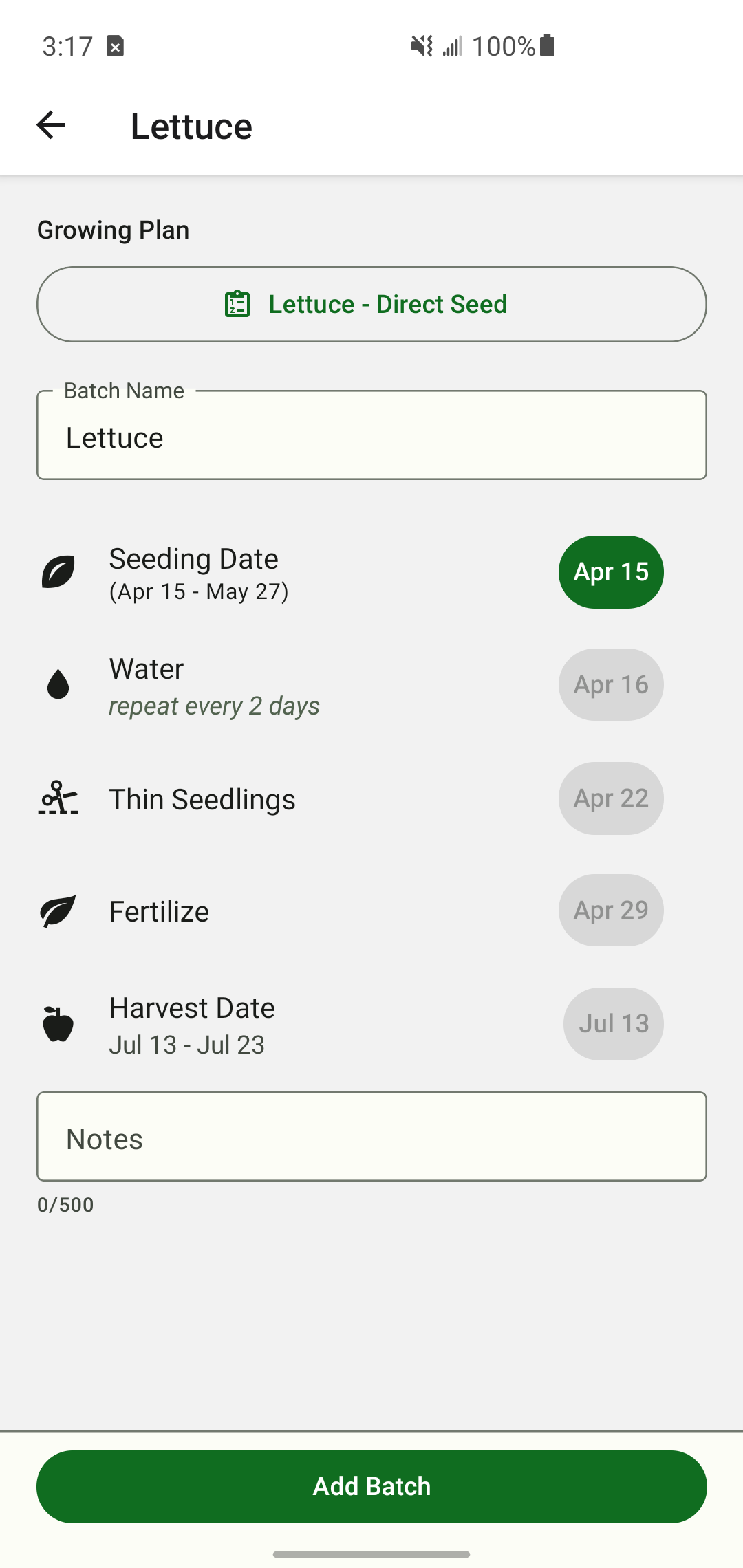
Lettuce is frost-tolerant, so we can plant it earlier! Select Lettuce and choose "Direct Seed" as the growing method.
GrowPlanner shows the planting window starts in early spring:
Since lettuce matures quickly, you can plant multiple batches throughout the season for continuous harvests!
Lettuce prefers cooler weather. Plant early in spring and again in late summer for fall harvests.
Buy transplants for easy, instant herbs
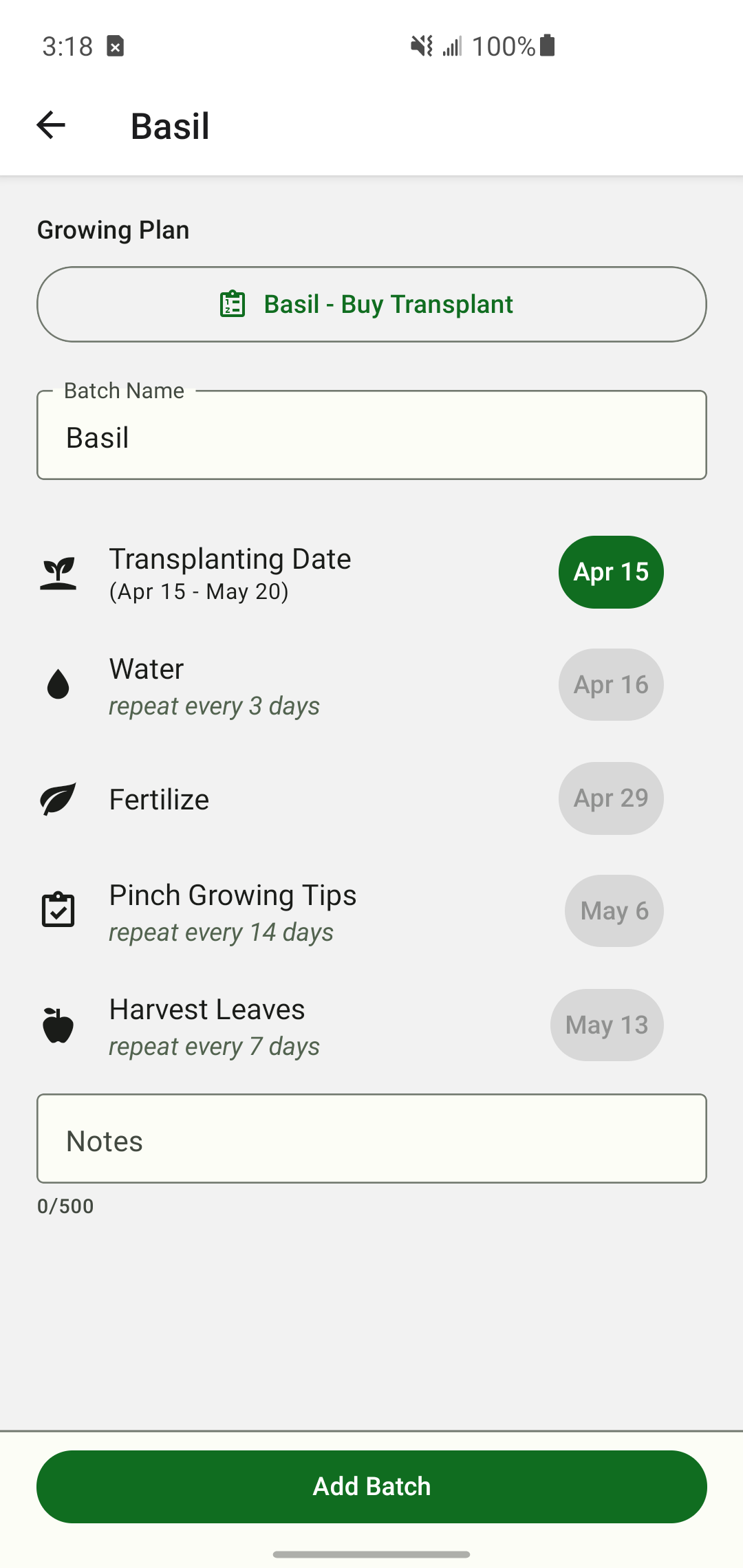
For basil, let's try the "Buy Transplants" method. This is perfect when you want instant gratification or missed the seed-starting window.
Simply pick up basil seedlings from your local nursery after the last frost:
Basil and tomatoes are companion plants - they grow great together and taste amazing in the same dishes!
Pinch basil flowers as they appear to encourage bushier growth and more leaves.
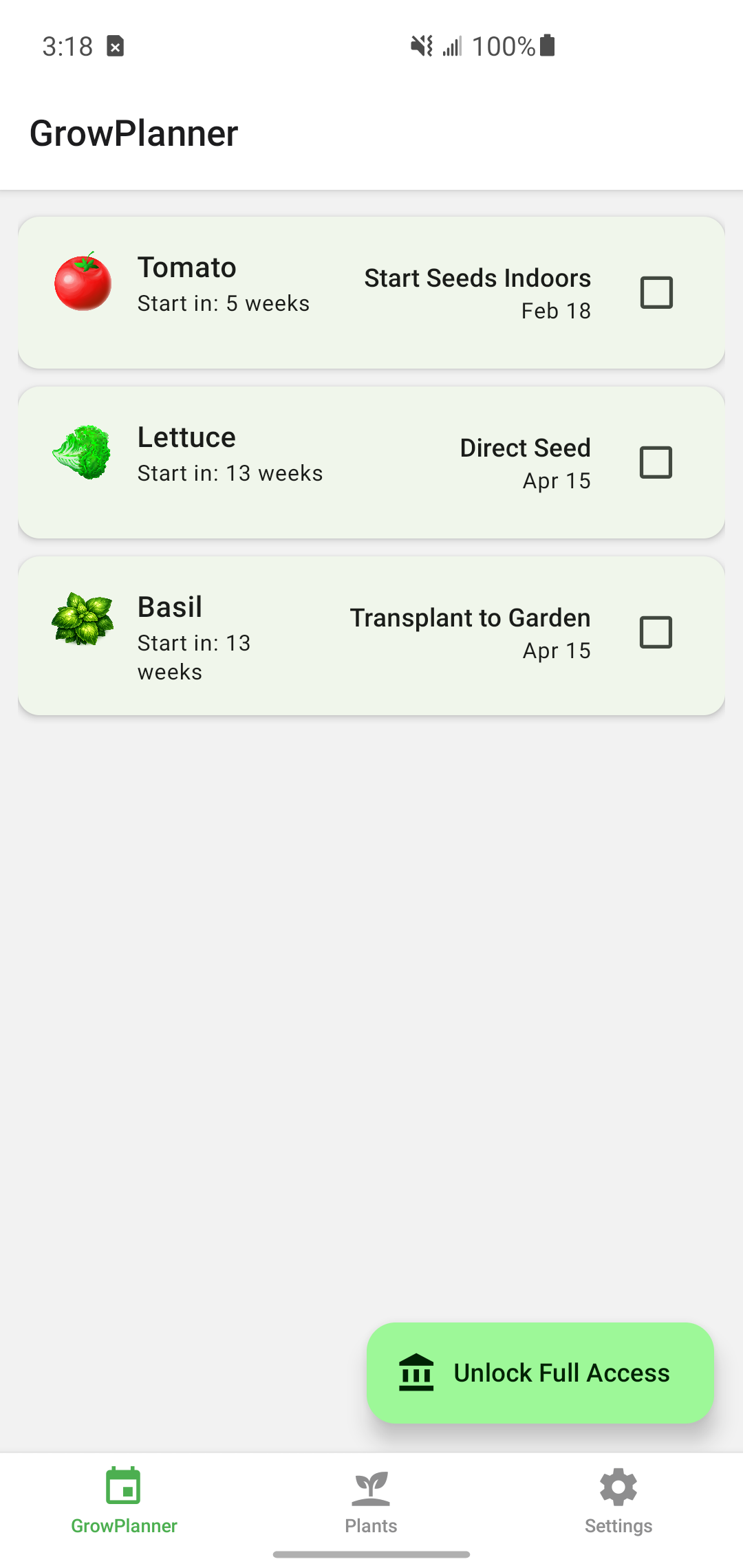
Your dashboard shows everything at a glance
Back on the home screen, you'll see all your batches with their upcoming tasks. The app shows:
Tap any batch to see all its tasks, mark them complete, and add notes about your progress.
Enable notifications to get reminded at your preferred time each day about what needs attention!
Check your garden dashboard each morning with your coffee. It only takes a minute to see what's on today's agenda.
Here's what our example garden looks like over the season
Plant seeds in seed-starting mix. Keep warm and moist until germination.
Sow lettuce seeds directly in the garden. Thin seedlings as they grow.
Move tomato seedlings outside. Buy and plant basil transplants.
Start harvesting outer lettuce leaves. Plant more for succession!
Begin harvesting basil leaves. Regular picking encourages growth.
Enjoy your first homegrown tomatoes! Harvest continues through fall.
From just three plants, here's what your beginner garden can produce
20-30 lbs per plant over the season. Fresh salads, sauces, and more!
Continuous harvests for months. Fresh salads all season long.
Endless fresh herbs. Make pesto, garnish dishes, or dry for later.
Download GrowPlanner and begin planning your first harvest today.
Download Free on Google Play